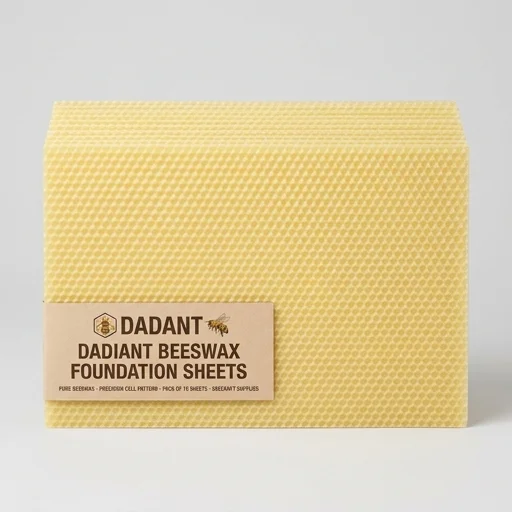
 No. 24
 HiveMeadow
HiveMeadow
HiveMeadow
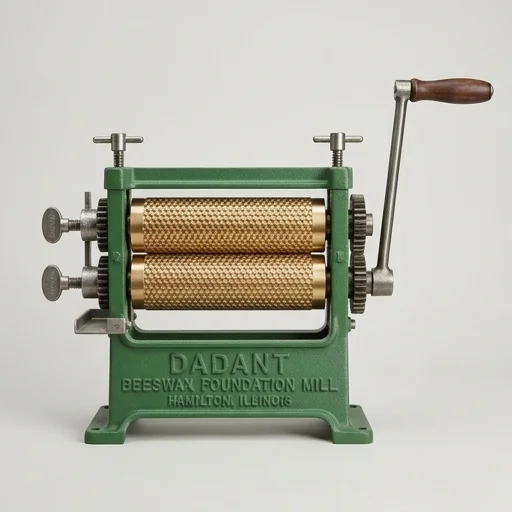
The Dadant Beeswax Foundation Mill is a solid investment for serious beekeepers and small-scale wax processors who want control over foundation quality and purity.
As an Amazon Associate we earn from qualifying purchases. It costs you nothing and does not affect the score above.
The Dadant Beeswax Foundation Mill is a solid investment for serious beekeepers and small-scale wax processors who want control over foundation quality and purity. While it demands some manual effort and initial setup patience, the durability of its cast iron construction and the consistency of its cell imprint make it a worthwhile long-term tool for anyone looking to recycle their own cappings wax into reliable foundation sheets.
Derived from this product's specification, features and owner reports.
The Dadant beeswax foundation mill stands as a benchmark tool for beekeepers and small-scale wax processors who want to produce their own foundation sheets rather than relying on commercially embossed stock. Built around a pair of precision-engraved rollers, the mill presses thin sheets of clean, filtered beeswax into the familiar hexagonal cell pattern that gives bees a head start on comb construction. The rollers are typically cast in durable metal, often bronze or aluminum alloy depending on the model and era of manufacture, and the cell impressions are cut deep and uniform so that the resulting foundation encourages straight, even comb with minimal drone cell drift. Beekeepers who run their own cappings wax or cull old comb back into usable sheets appreciate the mill because it closes the loop on wax recycling, letting them reuse their own hive-derived wax instead of purchasing new foundation each season.
Operating the Dadant mill involves feeding a properly tempered wax sheet between the two rollers, which are cranked either by hand or, on some setups, connected to a small motor for higher-volume production. The wax must be at the right temperature and thickness beforehand, since wax that is too cold cracks under the roller pressure while wax that is too warm smears the cell pattern instead of holding a crisp impression. Many keepers dip a cotton sheet or use a wax dipping board to create the initial wax slab, then run it through the mill once or twice to fully set the hexagonal embossing on both sides. The resulting sheets come out thin, flexible, and ready to be cut to frame size and wired into standard Langstroth or Dadant-style frames, giving bees a familiar foundation pattern without introducing store-bought wax of unknown origin into the hive.
For beekeepers concerned about chemical residues, foulbrood contamination, or simply wanting full traceability of their wax supply, the Dadant foundation mill offers a practical solution that keeps the entire wax cycle in-house. Because the mill imprints the same cell size and spacing bees expect from commercial foundation, colonies readily accept and draw out the comb without hesitation, and the finished sheets integrate seamlessly into existing frame and box systems. The tool requires periodic maintenance such as cleaning residual wax from the roller grooves and occasionally oiling moving parts to keep the crank mechanism turning smoothly, but with reasonable care it remains functional for many seasons of use. Its enduring presence in apiaries that prioritize self-sufficiency reflects why the Dadant name continues to be associated with reliable, purpose-built beekeeping equipment rather than mass-produced convenience items.
No. 24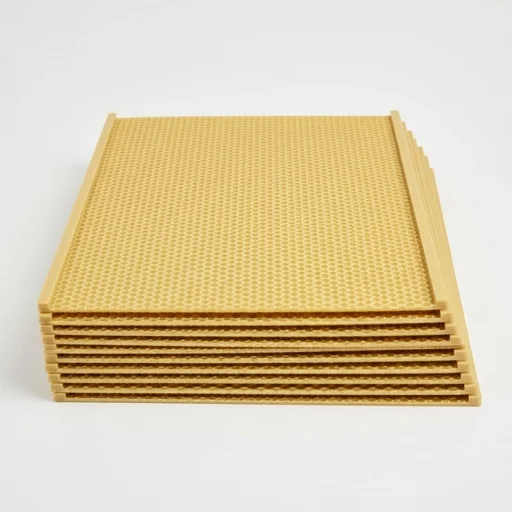 No. 60
 No. 1
No. 1 No. 18